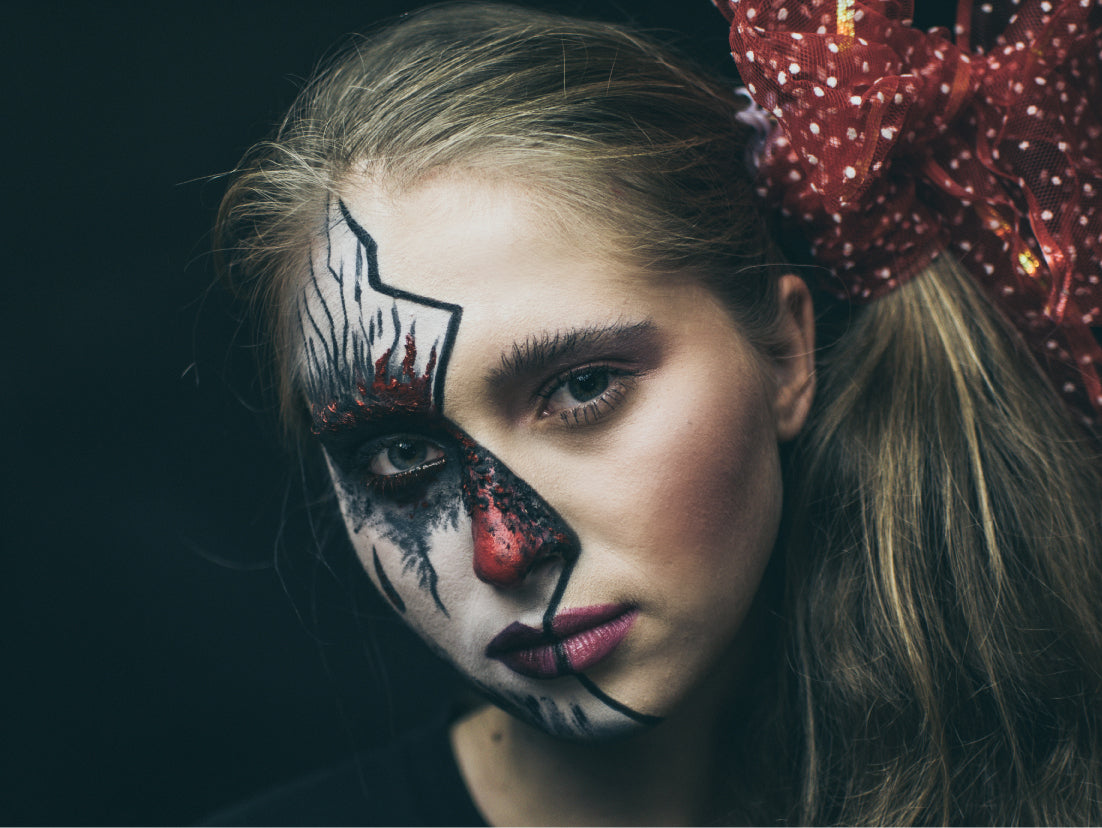
3D Make-up for Advanced Students: Optical Illusions on Your Face
Are you an experienced face painter looking to take your skills to the next level? Then 3D face painting is for you. With the right techniques, you can create optical illusions that appear to jump off the face—from floating shapes and openwork skin to realistic objects that appear to be inside or on the face.
In this blog post, you'll learn how to create impressive 3D makeup designs as an advanced artist, and which techniques and materials you'll need.
🧠 What is 3D makeup?
3D face painting , also known as optical illusion face painting , is the creation of depth, volume, and perspective using light, shadow, and color. By playing with these elements, you can distort facial or body parts or make objects "float" on the skin.
Examples of popular 3D effects include:
-
Open skin (with view of muscles or bones)
-
Cracked or torn face
-
Animals that appear to be “breaking out” of their skin
-
Hammered nails or buttons
-
Illusionistic masks or see-through effects
🛠️ 3D Face Painting Supplies
To apply 3D makeup effectively, it's important to use high-quality materials. Consider:
-
Water-based makeup (white, black, gray, skin tones, red)
-
Fine brushes for detailed work
-
Sponges for blending
-
Reference images (to improve realism and anatomy)
-
Optional: makeup blender and shadow palette for extra realistic transitions
🎯 Tip: For realistic 3D makeup, use a light to dark gradient combined with hard lines for shadows.
🖌️Important Makeup Techniques for 3D Effects
Here are some essential techniques you need to master if you want to apply 3D makeup:
1. Shadow and light
The key to any 3D effect is well-placed shadows and highlights . Use black and gray tones to suggest depth, and white or skin tones to accentuate "popular" areas. Consider how light falls on an object and where shadows would naturally occur.
2. Drop shadow
A "drop shadow" creates the effect of an object floating above the skin. You first paint the object (for example, a rock or spider) and then paint a shadow underneath it on the opposite side of your imaginary light source.
3. Contours and lines
Use clean, dark lines to create sharp edges. This works especially well with cracked or torn skin. Make the inside darker than the outside to enhance the "hole" effect.
4. Gradient (blending)
For realistic effects, it's essential to blend colors subtly. Work from dark to light, and use a sponge or blending brush to soften harsh transitions.
🧪 Popular 3D makeup ideas for advanced students
🔩 Metal under the skin
Paint an openwork skin with screws, gears, or a metal texture underneath. Use skin color, black, and red to create a realistic wound edge, and add glossy lines to the "metal" for a chrome effect.
🕳️ Floating hole (in the forehead or hand)
Create a dark circle with black and gray, add a hard white border to the outside, and paint a shadow underneath. The result: an optical "hole" that looks like you can see through it.
🐜 Insects crawling on the face
Draw a realistic beetle or spider, add a drop shadow underneath, and it'll look like it's actually sitting on your skin. Small details like legs and shiny eyes enhance the effect.
⏱️ Time and practice
3D face painting often takes more time than standard designs, as it's all about precision and visual impact. Therefore, plan plenty of time, especially if you're working live at an event or photoshoot.
Practice on an arm or leg before doing a face, and work with good reference images or tutorials if you want to depict realistic anatomy or perspective.
📸 Extra tip: photograph your work well
3D makeup truly comes to life in photos. Ensure good lighting, preferably from the side, to enhance the shadow and light effects. Use a smooth background and focus sharply on the design for professional-looking results.
🔎 Conclusion: 3D makeup is art at skin level
For advanced face painters, 3D face painting is a great way to refine their skills and make an impression. With the right technique, materials, and practice, you can create realistic, impressive effects that will make people look twice.
Whether you're creating a cutout face or a spider that seems to crawl out of the skin, the possibilities are endless. Keep experimenting and developing, and remember: light and shadow are your best friends in the world of 3D makeup.
5 tips for beginners to learn how to apply makeup
How to Apply Makeup Easily and Without Too Much Input: Tips for Busy Moms
Related articles

Unicorn schminken stap voor stap: makkelijke tutorial voor kinderen

Koningsdag schmink: de leukste ideeën, voorbeelden en tips voor kinderen

Dieren schmink voor kinderen: 10 leuke ideeën + tips voor veilige gezichtsverf

How to Apply Makeup Easily and Without Too Much Input: Tips for Busy Moms